Why a Clogged Drain Keeps Coming Back (And the Hidden Signs Most People Miss)
A clogged drain rarely “comes out of nowhere.” In our experience across AR, recurring problems usually mean something is still inside the line, or the drain pipe has an underlying condition that keeps trapping debris. If you’re dealing with a clogged drain that returns every few days or weeks, you’re not just unlucky—you’re seeing a pattern that points to a specific cause.
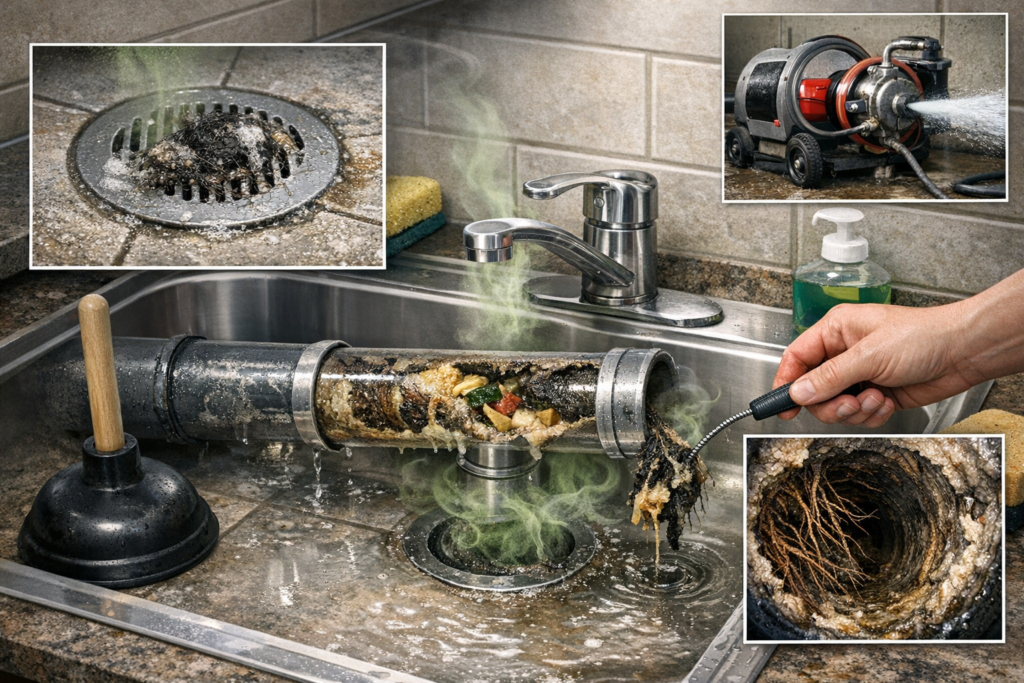
The most common repeat offenders are hair, grease, and food scraps. Hair tangles in a shower drain or tub drain and builds a net that catches soap scum and mineral buildup. In kitchens, grease cools inside the kitchen sink drain and narrows the passageway, so even small amounts of food scraps start sticking. That’s why you may get a slow drain first, then standing water, and finally a full drain blockage.
Warning signs that the issue is bigger than “just a clog”
When we respond to emergency plumbing service calls, these are the red flags that tell us the problem may involve the main sewer line or a deeper section of drain pipe:
– Gurgling drains in a sink, tub, or toilet (often air struggling to move past a blockage)
– Bad drain odors or a sewer smell that comes and goes
– Standing water that returns shortly after drain unclogging
– Multiple fixtures acting up at the same time (a classic clue for sewer line clogs)
– A slow draining sink in more than one bathroom sink drain or a slow draining sink plus a slow shower drain
Gurgling drains and sewer gas odors are especially important. They can indicate a venting issue, a partial blockage, or even a developing backup in the main sewer line. We’ve seen homeowners try repeated drain cleaning with store products, only to have the symptoms get worse because the clog isn’t in the trap—it’s farther down the drain pipe.
Why “temporary fixes” fail
A plunger can move a soft clog, but it often doesn’t remove the buildup stuck to pipe walls. A basic plumbing snake from the hardware store can poke a hole through the center of a clog, but it may leave grease or soap scum and mineral buildup behind. That leftover residue becomes a magnet for the next clog.
Another reason repeat clogs happen is tree roots in sewer lines. In many Arkansas neighborhoods, roots seek moisture and can slip into tiny cracks or joints. Once inside, they snag tissue and waste, creating recurring sewer line clogs that feel like the drain “keeps clogging for no reason.” If you’ve got repeat backups, gurgling drains, or a sewer smell, it’s time to consider that the cause may be beyond the fixture and into the main sewer line.
At SOS Plumbing, we treat recurring clogs as a diagnostic problem first—not a guessing game—because lasting results depend on finding the real cause before choosing the right clogged drain repair approach.
DIY Drain Unclogging That Actually Helps (Plunger, Drain Snake, and Enzyme Options)
We’re all for practical, safe DIY steps when they make sense. The goal with drain unclogging at home is to restore flow without damaging your drain pipe or pushing the problem deeper. If you’ve got a slow drain in one fixture—like a bathroom sink drain or shower drain—these steps can be effective before you call a professional plumber.
Step-by-step DIY approach for a slow drain
1. Start with a plunger
– Use a cup plunger for sinks and a flange plunger for toilets.
– Add enough water to cover the cup.
– Seal the overflow opening on a sink with a wet rag for better suction.
We recommend 15–20 firm plunges, then test drainage. A plunger is simple, but it can solve many early blocked drain situations.
2. Move to a plumbing snake or drain snake
– A small hand-crank plumbing snake works well for a bathroom sink drain and some tub drain clogs.
– Feed slowly, rotate, and pull debris out rather than forcing it down.
DIY drain snakes are helpful, but they’re limited in length and strength compared to professional equipment. If you keep hitting resistance or can’t pull anything back, stop and avoid damaging the drain pipe.
3. Use a drain auger (carefully)
A drain auger is often better for toilets, but can also help with certain deeper clogs depending on access. The key is control: too much force can scratch porcelain or damage older piping. We’ve seen DIYers accidentally create leaks that later require leak detection and pipe repair and replacement.
Enzyme drain cleaner vs. chemical drain cleaner (and why we’re cautious)
For recurring buildup, we prefer an enzyme drain cleaner in many situations. Enzymes work gradually by digesting organic material like hair, grease, and food scraps. They’re especially useful as preventative drain maintenance after you’ve restored flow.
A chemical drain cleaner is different. It can generate heat and harsh reactions, and we’ve responded to calls where chemical drain cleaner contributed to pipe damage, especially in older drain pipe materials or already-stressed joints. It can also create a safety hazard for a professional plumber later, since splashes can cause burns.
Here’s how we guide customers:
– Enzyme drain cleaner: better for ongoing maintenance and mild buildup
– Chemical drain cleaner: risky, avoid in recurring clogs, avoid if you suspect a blocked drain beyond the trap, and never mix products
If you’ve tried a plunger, a drain snake, and safe drain cleaning habits, but the clogged drain returns, that’s when clogged drain repair becomes less about “tools” and more about diagnosing the system—especially if you notice standing water or gurgling drains again within days.
Clogged Drain Repair in AR: How We Diagnose Recurring Blockages the Right Way
When homeowners in AR call us for clogged drain repair, they often say, “It works for a bit, then it backs up again.” That’s the hallmark of a partial blockage, a buildup problem, or a main sewer line issue. Our job at SOS Plumbing is to stop the cycle by confirming where the blockage is, what it’s made of, and why it keeps forming.
Sewer camera inspection: the fastest way to stop guessing
A sewer camera inspection is one of the most valuable tools we use for repeat clogged drain cases. Instead of assuming it’s hair or grease, we can visually confirm conditions inside the drain pipe and main sewer line. This helps us find:
– Grease accumulations in the kitchen sink drain line
– Offsets, bellies, or broken sections of drain pipe
– Tree roots in sewer lines
– Scale and soap scum and mineral buildup
– Objects or heavy debris causing a drain blockage
We like sewer camera inspection because it makes the solution precise. If the camera shows roots, we talk about root removal and longer-term prevention. If it shows heavy grease, we may recommend hydro jetting. If it shows a damaged line, we can plan pipe repair and replacement instead of doing endless drain cleaning that never holds.
Hydro jetting: deep cleaning for stubborn drain and sewer line clogs
Hydro jetting is an advanced method that uses high-pressure water to scour the inside of the pipe walls. It’s not the same as “punching a hole” through a clog. Hydro jetting clears out packed grease, sludge, and buildup that cause recurring blocked drain symptoms.
We often recommend hydro jetting when:
– A kitchen sink drain keeps slowing down due to grease and food scraps
– There are recurring sewer line clogs or main sewer line backups
– A customer needs stronger drain cleaning than a snake can provide
– There’s a commercial kitchen situation where grease trap cleaning is part of the overall drain health plan
Hydro jetting can be a game-changer, but it should be performed by a professional plumber who evaluates pipe condition first. That’s another reason we pair hydro jetting with sewer camera inspection—so we’re not pressurizing a compromised line.
Leak detection and the water damage risk of waiting too long
One overlooked part of clogged drain repair is the risk of water damage. When standing water sits in a sink or tub, it can overflow at the worst time—overnight, during work, or during a holiday. A blocked drain can also force water to escape from weak joints under pressure. That’s why we sometimes use leak detection when customers report damp cabinets, warped flooring, or recurring moisture near fixtures.
In our Central Arkansas drain cleaning work, we’ve seen small drain issues turn into major water damage repairs simply because the warning signs—slow drain, gurgling drains, sewer smell—were ignored. If a clog is repeating, it’s almost always cheaper to diagnose it now than to repair water damage later.
Long-Term Fixes: Preventative Drain Maintenance, Grease Habits, and When to Call SOS Plumbing
Once the immediate clogged drain is cleared, the real win is keeping it from coming back. We tell our customers that drain unclogging is a short-term event, but preventative drain maintenance is a long-term strategy. The best plan depends on whether your problem is in a shower drain, kitchen sink drain, bathroom sink drain, or the main sewer line.
Everyday habits that prevent a clogged drain
These are practical changes we’ve seen make a big difference:
– Use a hair catcher in every shower drain and tub drain; clean it weekly
– Never pour grease down the kitchen sink drain; collect it and throw it away
– Run hot water after washing dishes, and avoid sending food scraps into the drain
– Flush drains monthly with hot water (when appropriate for your plumbing) and consider an enzyme drain cleaner for maintenance
– If you have hard water, expect soap scum and mineral buildup and plan more frequent drain cleaning
For businesses and serious home cooks, grease trap cleaning matters. Grease traps (common in food service) capture fats before they enter the drain pipe system. When grease traps are neglected, grease moves downstream, creating drain blockage issues that no plunger or small drain snake will fix for long. We’ve helped customers connect the dots between grease trap cleaning and fewer emergency plumbing service calls.
When DIY ends and professional clogged drain repair begins
We recommend calling a professional plumber when:
– You’ve plunged and used a plumbing snake, but the slow drain returns quickly
– You have standing water in a tub drain or shower drain that won’t clear
– Multiple fixtures are affected (possible main sewer line issue)
– You notice gurgling drains, bad drain odors, or a sewer smell
– You suspect tree roots in sewer lines (common in older neighborhoods)
– You’ve used chemical drain cleaner and the drain is still blocked (stop and call—this can be dangerous)
This is where SOS Plumbing brings the right tools and the right sequence:
– Sewer camera inspection to pinpoint the cause of recurring sewer line clogs
– Professional-grade drain snake or drain auger when appropriate (stronger and longer than DIY versions)
– Hydro jetting to restore full pipe diameter in grease and buildup situations
– Leak detection if we see signs that water damage may already be starting
– Pipe repair and replacement when the drain pipe is broken, collapsed, or invaded by roots
Local AR service area and 24/7 options
We’re SOS Plumbing, and we’ve built our reputation by helping neighbors throughout Central Arkansas. When you need Central Arkansas drain cleaning that’s thorough—not just a quick drain unclogging—we’re ready to help. We regularly serve homeowners and businesses looking for a Ward, Arkansas plumber and customers in Cabot, Jacksonville, Sherwood, North Little Rock, and Lonoke.
We also know clogs don’t wait for business hours. If you’re facing standing water, a blocked drain, or signs of a main sewer line backup, our emergency plumbing service and 24/7 drain cleaning options are designed for nights, weekends, and holidays—because water damage spreads fast.
If your clogged drain keeps coming back, the fix is almost always a better diagnosis plus a stronger, system-level solution. We’ve found that combining smart habits with targeted clogged drain repair stops repeat clogs, protects your drain pipe, and helps you avoid bigger problems like sewer line clogs, leaks, and water damage. Schedule service with SOS Plumbing today at https://www.sosplumbingandrooter.com/ so we can inspect the issue, recommend the right drain cleaning plan, and get your home back to normal for good.
Learn more about drain safety and why harsh chemicals can be risky from the U.S. Environmental Protection Agency: https://www.epa.gov/saferchoice